5.3 Pricing
Once you’ve procured your goods, you’ll want to think about how you will price them. Produce is typically sold by the lb or kg. In Europe, the established norm is to pre-bag or pre-portion the products. While the pre-portioned approach (by bunches, heads, quarts, etc…) makes more up-front work for you, it generally results in a quicker sale and less waiting time for the consumer. You may (or may not) want to adopt it.
You’ll want to consider the purchasing behaviors of your customers and how the transactions will play out at your point-of-sale. Consider:
- If you are using pre-portioned products, is the sizing working for your customers?
- If you’re not using pre-portioned products, do you have plastic or reusable bags available? Are there restrictions around the use of plastic? Do you require your customers to bring their own bags?
- Does your pricing approach work for your customers?
- Are your customers relying upon government subsidies that influence their purchasing decisions (eg: a $10 Farmers Market Nutrition Program check)?
- Does your transaction process allow you enough time to engage with your customers?
You’ll also want to consider the point-of-sale (POS) system you’re using, integration with an electronic benefits system, such as SNAP (US), and your customer’s comfort level with handling cash. A simplified pricing strategy (eg: pricing by the quarter) can make for a smoother transaction for both you and your customers. It’s okay to try a few approaches in order to determine what works best.
What has worked best for you? What have you tried that didn’t work well? Share your thoughts with the community.
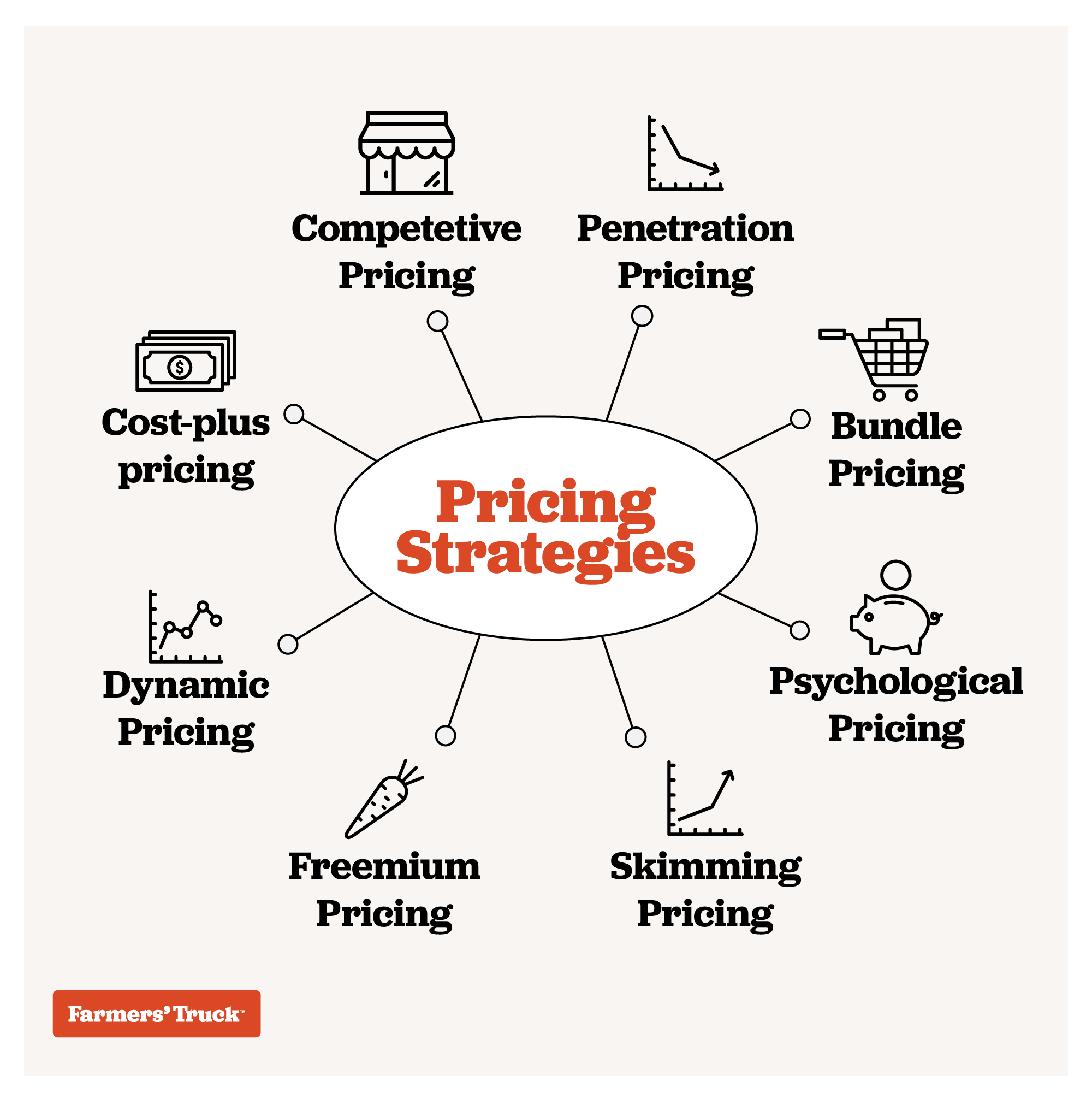
Before you set the dollar value of your products, do some research. You’ll want to keep track of the costs to procure your goods and then set an appropriate price for sale. Here are a few pricing strategies to be aware of:
- Cost-plus pricing: This is a very simple pricing strategy that involves calculating the cost to procure the goods and then adding on a percentage (profit) to set the selling price.
- Loss leader pricing: This strategy involves pricing some products lower than your actual costs in order to attract customers to your market.
- Psychological pricing: This pricing strategy is designed to have a positive psychological impact on customers, giving them a sense of having gotten a better price than they could have elsewhere. Here are a few types:
- Charm pricing: This pricing strategy involves the practice of setting prices lower than a whole number. For instance, pricing a bag of carrots at $1.99 instead of $2.00 makes it appear significantly cheaper than just the 1 cent difference.
- Time Constraints: “Today only, 50% off!” is an example of a pricing strategy that draws attention to a product and creates a sense of urgency around a deal. It’s a good option for items that aren’t moving well and will go to waste otherwise.
- Innumeracy: “Buy one get one free” is often used by retailers wanting to move more product than a single item. Positioning one product as free makes it a much more attractive purchase to the consumer than posting “50% off two items” even though the math is identical.
- Dynamic pricing: This pricing strategy is one in which you set different prices based on external triggers. For instance, you may decide to drop your prices on certain products an hour before closing each day.
Keep in mind: Regardless of what pricing strategies you choose to use, it’s critical that you keep your customers at the center of your actions. Always keep your products affordable and remember to convey the quality of your products. Over time, you will be able to determine what pricing strategies work best for your market and your customers. None of these pricing strategies will help you or your customers if your prices aren’t set correctly in the first place.
A final area of pricing that you will need to become well-versed in is taxation. Produce can be complex when it comes to taxation and tax laws vary considerably depending on your country, state/province, or county. In locations that have tax-exempt groceries, fruit and vegetables are generally not taxable, except in the instances where they have been processed. In some locations, a cookie might be taxable, but a pack of 6 would not be. There is variation in how taxes will need to be applied and it will be up to you to familiarize yourself with the regulation for your specified mobile market location by consulting your federal and local guidelines. You can use following resources as a starting point:
Canadian Taxes on Groceries:
US Taxes on Groceries: