3.2 Methods and Tools to Engage
In this lesson, we’ll introduce you to some practical methods and tools you can use to support your community engagement work. For this, we will lean on the Design Thinking process, a human-centered approach that you can adopt to engage with your community in a variety of ways, uncover insights about the problems impacting the community members, and design innovative solutions to address those problems.
Design Thinking originates from the world of product design, but it has recently gained widespread adoption among social entrepreneurs who are using it to engage with communities and to design innovative solutions to social problems.
Design Thinking provides a five phase process (Empathize, Define (the problem), Ideate, Prototype, and Test) to help guide you through the full life cycle of community engagement and problem solving.
Each phase plays a crucial role, providing an iterative, human-centered framework that prioritizes collaboration, compassion, and creativity.
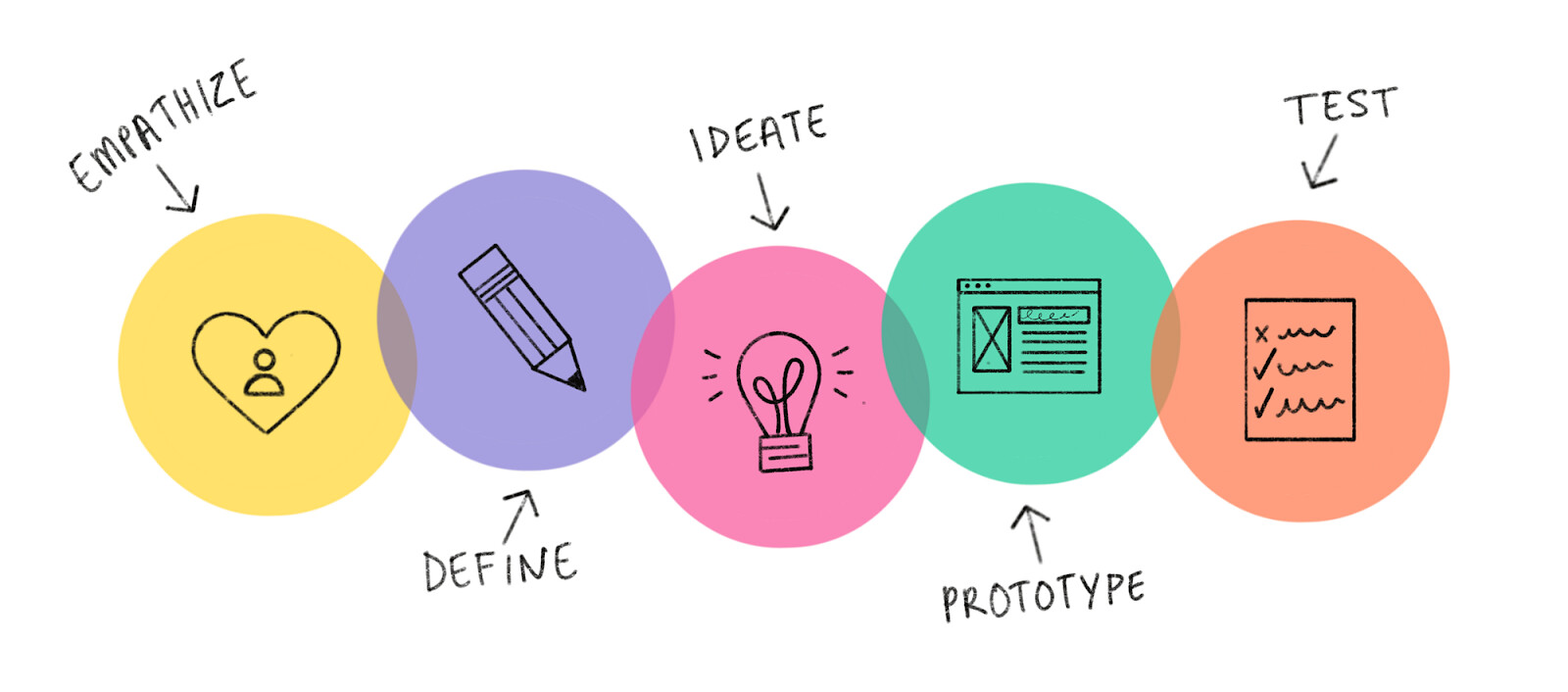
The 5 phases, which were established by Stanford University’s Center for Social Innovation. What follows is not a comprehensive lesson on Design Thinking, but a look at some of the concepts that can assist you in your community engagement work. There are a variety of free resources available to support the Design Thinking process and we’ll provide some core resources to help you get started.
Empathize
The Empathize phase is the first phase of Design Thinking and a critical phase for any successful community engagement effort. Empathy focuses on developing a deep understanding of your community, the unique perspectives of its members, their issues and realities, and how these impact them.
So how do you develop empathy within yourself and your team? “Empathy requires active listening and rapport-building for a deep understanding that can transcend innate personal bias or preconceived notions.” There are several proven methods that can be used to develop empathy. These include:
- Observations: Go where your users go, see what they care about.
- Interviews: Hold one-on-one interviews with community members to understand their experiences, their challenges, and their stories. attitudes on the topic you are exploring.
- Immersion: Step into the shoes of your community members for a day or more (eg: spend the day in a wheelchair to better understand the physical barriers that are experienced). While it can be difficult to truly and authentically “walk in someone else’s shoes” for a short period of time, taking action to try to better understand your community member’s challenges and what they feel and experience in their day-to-day life can lead you to deep understanding and empathy. Remember, however, to be conscious of being respectful in your actions and ensure you have the permission of your community members when seeking understanding through immersion.
Several tools to support empathy and the other phases of Design Thinking are available online. A free, comprehensive resource that we recommend is the The Field Guide to Human-Centered Design by IDEO, found at Design Kit: The Human-Centered Design Toolkit - IDEO
Resource: Empathy Map
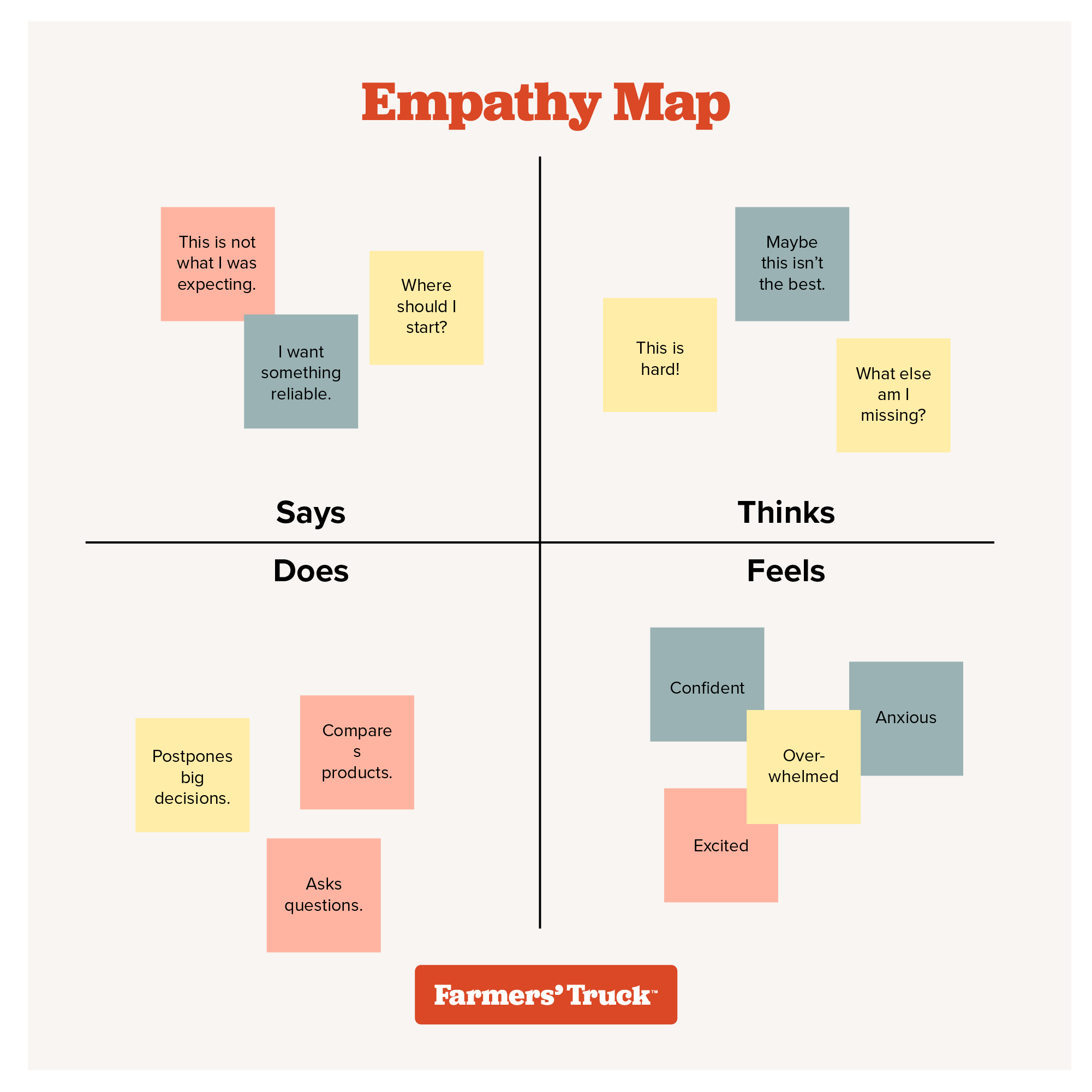
An empathy map is a simple yet highly effective way of capturing and consolidating information gleaned from interviews. Empathy maps are a one-page visual tool that your team can use to capture what community members do, say, think, and feel. This is an inexpensive method to facilitate understanding as you ease into your community engagement work. A great resource for empathy mapping: Empathy Mapping: The First Step in Design Thinking
From the Empathize phase, the other four phases of the Design Thinking process support you through problem definition, idea generation to tackle the problem, translating the ideas into prototypes, and testing the concepts with community members.
Here are some examples of how groups have used the Design Thinking process to help marginalized and underrepresented communities.
- Designing a Scalable Water and Hygiene Business: (7-min read)
- Reimagining Farmers Markets Through Design Thinking: (4-min read)
- Improving Food sovereignty thanks to Design Thinking: (8-min read)
- How Innovating for Sustainable Food Systems has the Power to Deliver Social Impact: (4-min read)
- A Tough Crowd: Using Design Thinking to Help Traditional German Butchers: (13-min read)
If you’ve explored some of the Design Thinking resources we’ve provided, you’ve probably gotten some sense of the vast quantity of information and resources available to you on the topic. If you are inspired to make use of this process, we encourage you to explore this topic further. If you have a resource that is particularly useful, please share it with this community. We’d love to hear why it was useful and how you used it.
A final word on Design Thinking, before we move on. When devising solutions for your community –– whether you are following a Design Thinking approach or not –– you would be wish to consider your solution through the “3 lenses of Design Thinking”:
- Desirability (what is the social goal of the community?)
- Feasibility (is it possible to build/implement it?)
- Viability (can the business meet its financial goals by doing so?).
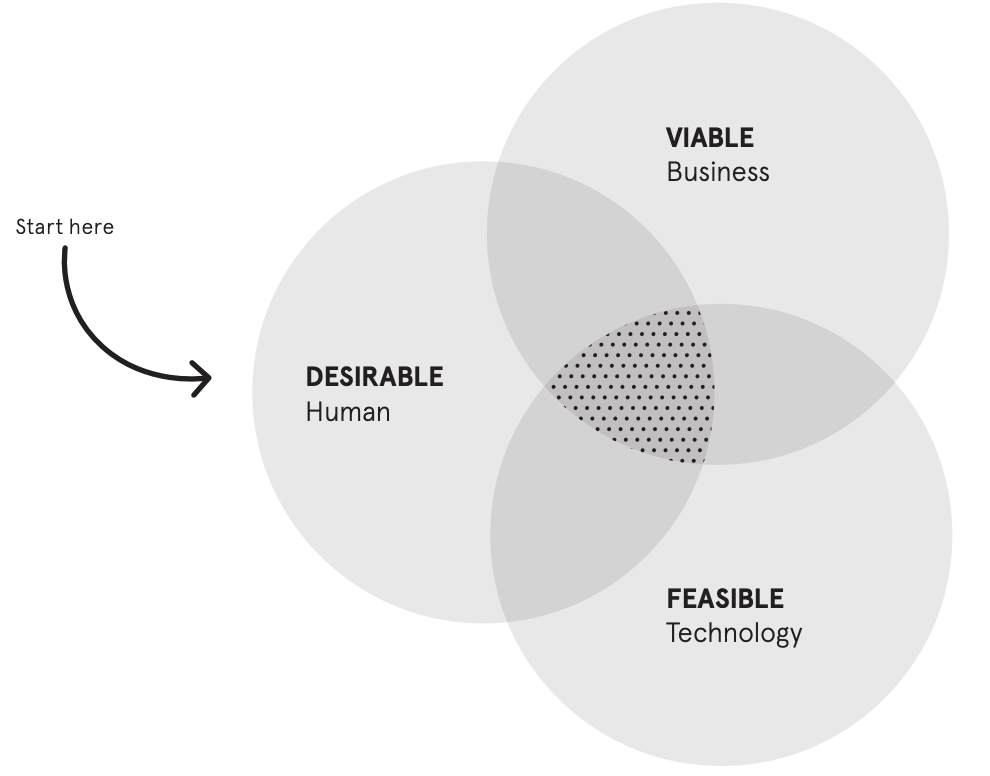
As a mobile market venture, you can use these 3 lenses to first identify the needs of your community, then assess if it is possible for your venture to create or implement the solution that’s been identified. Finally, you’ll need to understand the costs involved and determine if you can afford to move ahead with the idea. The “3 lenses” provide an easy mechanism to assess initiatives of any scale, providing a quick reality check for you and your team.
Reflection: Think about an initiative your market is currently working in or about to start. Can you answer the desirability, feasibility, viability questions for this initiative?