1.1 The Mobile Market Concept
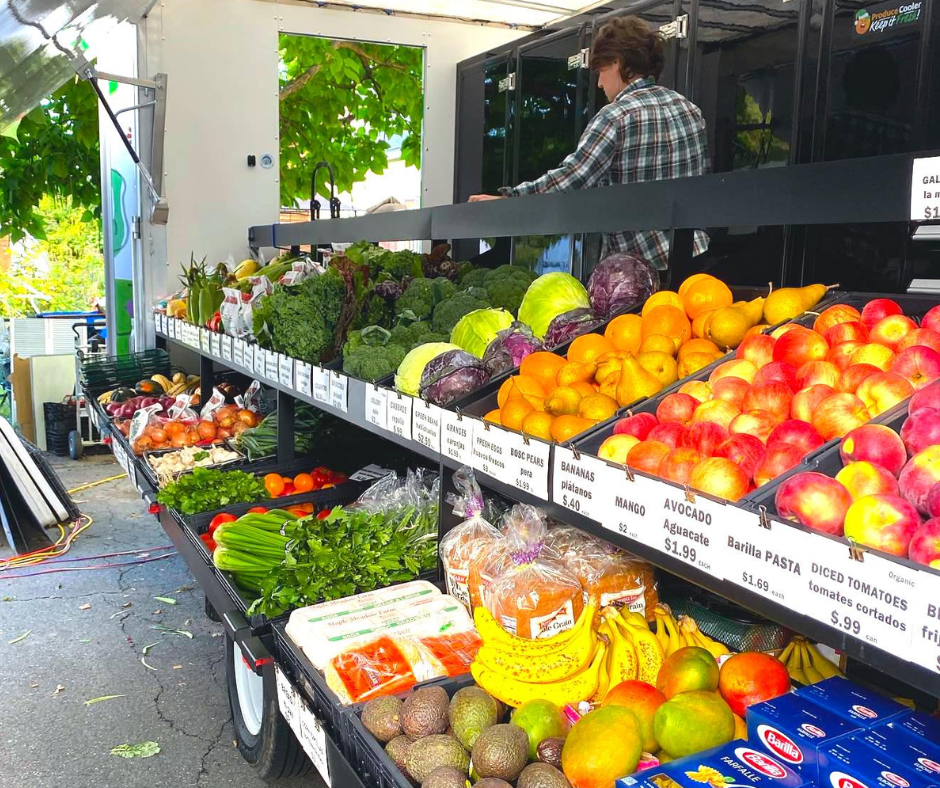
You have likely encountered mobile markets on your travels. Perhaps it was a trailer or a van set up on the side of the road or in a parking lot. Perhaps it was a simple tent with tables, or maybe it was a fully equipped van with refrigeration and all kinds of modern conveniences – even a smoothie bar!
Regardless of what form mobile markets take, they all share a common purpose: to address food access disparities in their local communities by providing a central hub for accessing locally grown and produced food.
Mobile markets are often run by nonprofits, urban farms, or food banks. All driven by a social agenda, these groups recognize the opportunities presented by a market that is mobile, moving from place to place, able to reach varied and often underserved neighborhoods. Mobile markets deliver fresh, healthy food – and viewed from a wider lens, they can also change the public health outcomes of minorities and low-income communities that are most at risk for food security related health issues, such as obesity and diabetes.
Providing free fresh food as a treatment for diabetes yields a more than 40% decrease in the risk of death or serious complications. (Source: Tufts University)
While the community impact of mobile markets can be great, launching and running a sustainable mobile market can be challenging. Balancing perishable products with low margins is complicated business. Most mobile market owners/operators must face the reality that their mobile market ventures won’t generate enough income to cover their operating budgets. Given this, mobile markets will often require alternative funding much of the time unless some creative solutions are employed. We will cover some of those solutions such as corporate sponsors, vegetable prescription programs, value added products, and more in later modules.